One of the strongest ranking factors in 2026 is the topical authority. The search engines have begun to assess how in-depth and extensive a site addresses a topic as opposed to single keywords. With an organized content ecosystem you are able to indicate authority, enhance exposure and obtain quicker rankings. Having a powerful content cluster approach will make your site a reliable one in your niche.
Topical Authority What is Topical Authority?
Topical authority is the magnitude and volume of content your web site puts out on a topic. You do not write random articles, but you create a network of allied pages which exhaust a subject. This will assist the search engines in knowing your site is a specialist resource and thus better ranking as well as increased credibility.
Future-facing 2026 Why It Matters.
In 2026, AI-based algorithms can make examinations on the context, relationships, and semantic meaning. Sites that have a lot of content and have good connections outshine those who solely depend on optimization of the keywords. This change renders topical authority a key to long-term success of SEO and long-term increases in traffic.
Basic components of a Content Cluster Strategy.
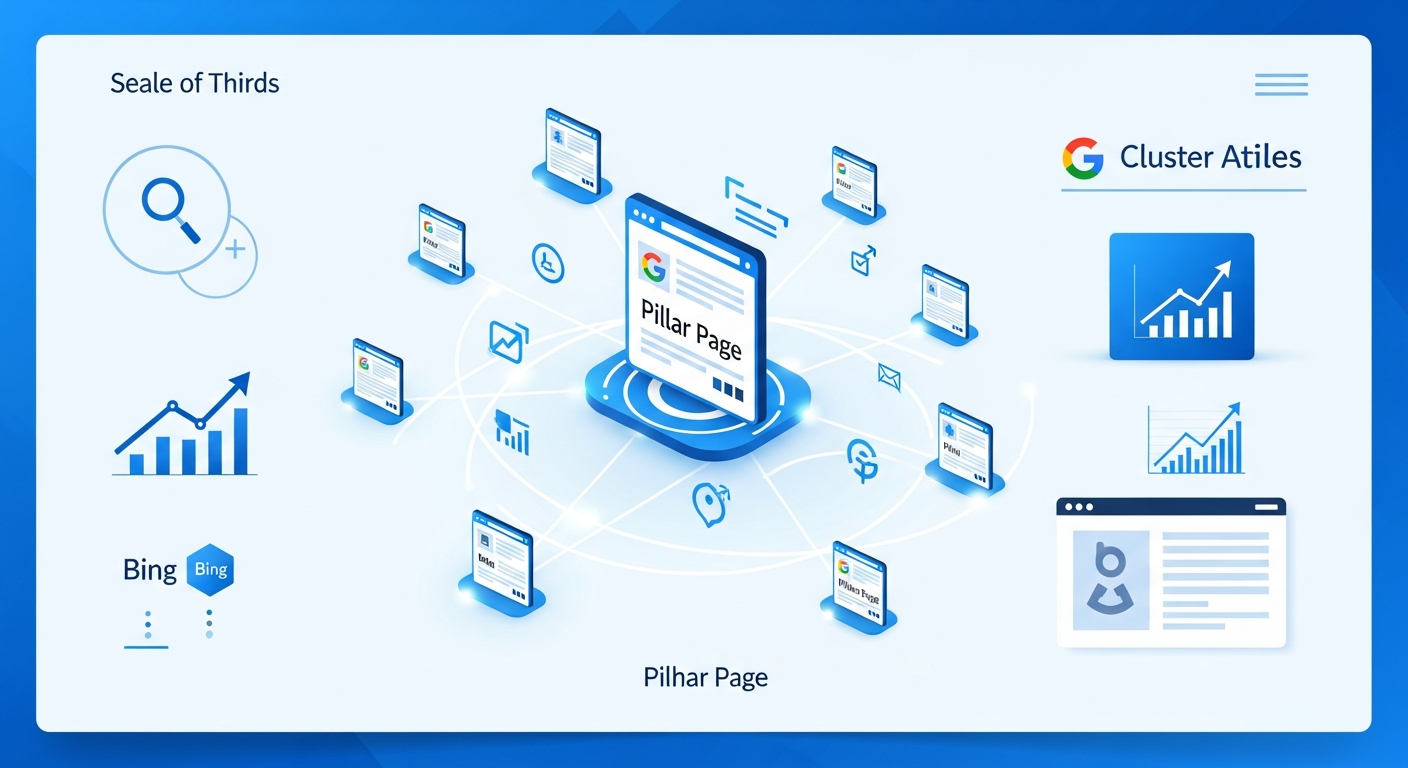
- Pillar pages will serve as the focal point discussing a wide topic.
- Cluster articles are articles which are specialized in terms of subtopic and keywords.
- All the content that is related is linked internally.
- Keywords mapping will make sure that there is adequate coverage in terms of topics.
- Expertise and trust are founded on the content depth and quality.
Pillar Content
The basis of your topical authority strategy is pillar content. It is a detailed, long guide, which discusses the primary subject in detail. This is the central page of your content cluster and all supporting pieces are linked to this page. An effective pillar page will enhance the crawlability and spread authority over your site.
Cluster Content
Cluster content entails several supporting articles which go into deeper subtopics. All of the pieces are aimed at a particular keyword and offer important information. These articles have got links back to the pillar page and to each other and this provides a powerful internal linking structure, which improves the performance of SEO.
Progressive Plan to establish Topical Authority.
1.A Focused Core Topic should be selected.
The most important and the first step is to choose the proper topic. Rather than going wide and expanding on a wide range of keywords, narrow down to a niche and develop meaningful and deep content. A clear subject matter will enable you to gain authority quicker and fight better in the search results.
2. Perform Keyword Clustering
The clustering feature of key words will assist you to group search terms in logical clusters by the intent and relevance. This will make sure that every piece of content has a defined purpose, and is not duplicated. A good clustering also enhances planning of content and enforcing the topical coverage.
3. Design an All-encompassing Pillar Page.
Make sure your pillar page addresses the central subject matter in depth, and is a hub. It should have systematic headings, elaborate descriptions and in-text links to all the supportive articles. A well-designed pillar page makes users more engaging and it can aid search engines to comprehend your content structure.
4. Release Cluster Content of high quality.
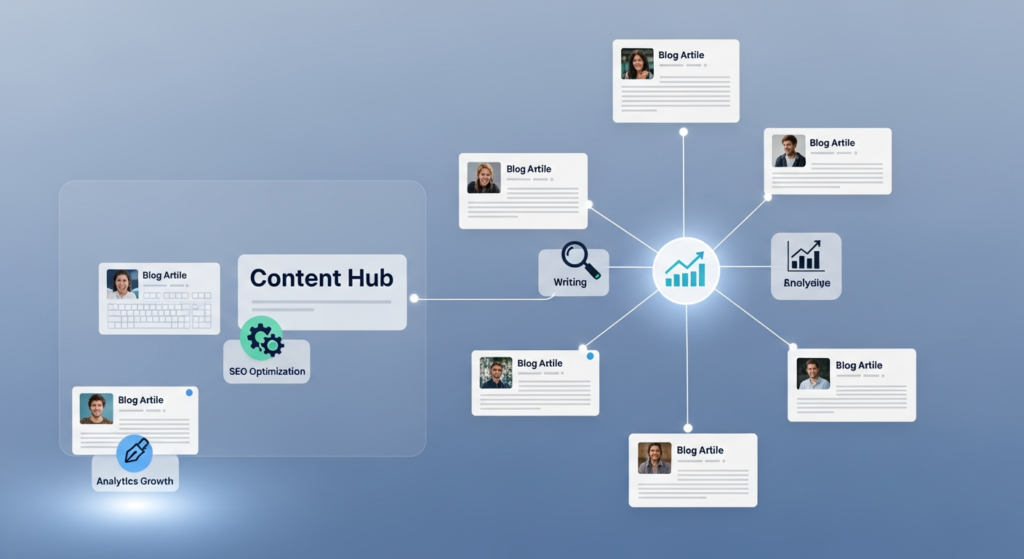
Articles should also be in support of this, and they should be in-depth regarding particular subtopics. All the articles should be informative, properly structured and user intensive. The regular posting of quality content will help you exercise power and make your site pertinent.
5. EnhanceInternalLinking Structure.
- Connect all the cluster articles to the pillar page.
- Related cluster articles have to be connected to enhance navigation.
- Write descriptive anchor text to be more SEO-friendly.
- Have a logical hierarchy of linking between all pages.
- Periodically check links to correct broken or out of date links.
Internal Linking Importance
Interlinking is important in sharing power throughout your web site. It assists search engines to find and index your pages more effectively besides directing the users to pertinent information. The powerful connection system will promote user experience and ranking potential.
6. Revise and Refresh the Content on a regular basis.
Its necessity is to keep your content up to date in order to retain rankings. Frequent updates will keep your information updated and pertinent. This too indicates to the search engines that your site is alive and well to be trusted and this may have a positive effect on the visibility.
Developed Techniques to Rankings that are quicker.
Semantic SEO Approach
Semantic SEO aims at using related terms and contextual language as opposed to utilizing the same keyword. This enhances search engine indexing behavior of what you have to say and will enable you to rank in a variety of related queries. It makes it easier to read and to interact with the user.
Building E-E-A-T Signals
The important aspects of modern SEO are Experience, Expertise, Authoritativeness and Trustworthiness. Adding details about the authors, practical examples and references help to increase the credibility of your content. These indicators significantly contribute to prioritizing competitive issues.
Using AI Tools to its advantage.
The AI tools can be used in the research, structuring of the content and optimization. Nonetheless, human touch is needed to uphold originality and quality. The efficiency of AI with human creativity results in greater and more authentic content.
Conclusion
The topical authority to be built in 2026 has to be approached strategically with the emphasis on depth, structure, and consistency. With a well-considered content cluster strategy, high-quality content and lots of internal links, you will be able to develop your site as a reliable source of information in your niche. This not only enhances rankings, but also guarantees future growth and sustainability of search engine results.
A list of frequently asked questions (FAQs).
1. What is the time frame to develop topical authority?
The initial changes in terms of ranking and traffic normally require several months of regular publications and optimization.
2. What is the amount of articles that need to be included in a content cluster?
This is based on the subject, but a powerful cluster will consist of one pillar page and a number of supporting articles.
3. Are novices able to develop topical authority?
Yes, it is possible to use beginners to establish authority by targeting a niche, producing quality content, and being consistent.
4. Is internal linking important or not?
YES, internal linking is required since it links your material and enables search engines to comprehend your site framework.
5. Will I have to revise old material on a regular basis?
Yes, content up-to-date will keep it accurate, enhance user experience, keep or increase rankings.